League Dominator
4.1 57.00 Reviews
Analysis By AppCompare
I approached League Dominator as a practical tool for fantasy football rather than as another app to check casually during the week. Its purpose is clear: help me make better decisions in my own fantasy league. That focus is useful, but it also means the experience depends heavily on how much league information I am prepared to provide and how carefully I interpret the recommendations.
Developed by Footballguys, this free sports app is aimed at fantasy managers who want more guidance than a basic roster screen provides. It is available for Everyone, runs on Android versions starting with 5.1, and currently appears as version 2023.9. The app has reached over ten thousand installs, with an average rating of 4.1 from more than five hundred ratings. Those figures suggest a focused audience rather than a mass-market fantasy platform.
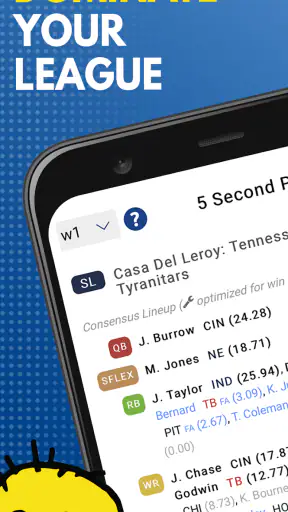
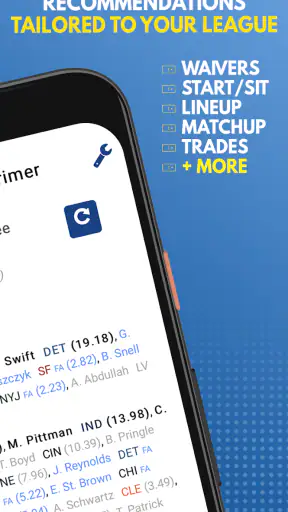
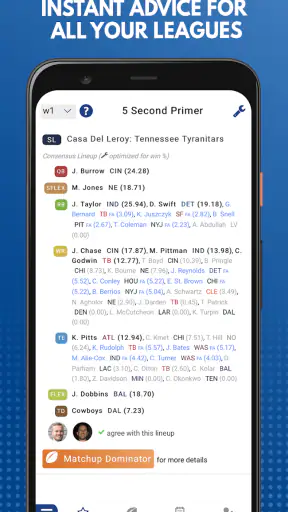
My overall impression is that it works best as a decision-making companion. I would not treat it as a complete replacement for the fantasy service where my league is hosted. Instead, I would use it to think through lineup choices, roster moves, and weekly priorities, then return to the official league app to make the actual changes.
Where the first-use experience can become confusing
The biggest source of friction is not necessarily the app itself. It is the gap between what a new user expects and what a fantasy analysis tool is designed to do. Someone looking for a simple list of players to start may find the process more involved than expected. The value comes from applying information to your league, so the initial experience can feel less immediate than opening a standard fantasy scoreboard.
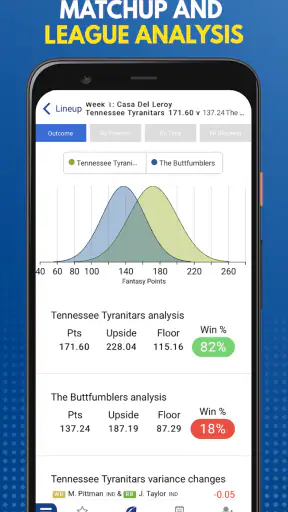
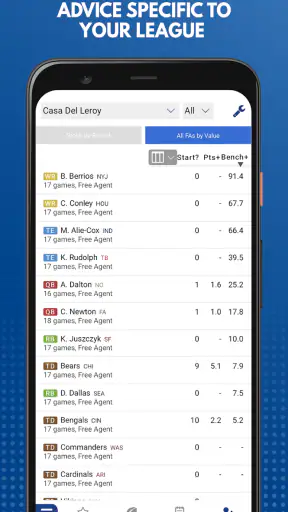
That distinction matters. A normal league app usually puts the schedule, standings, matchup, and roster in front of me. League Dominator is more useful when I have a specific question, such as whether my current bench option deserves a starting place, whether a roster spot is being wasted, or which weakness should receive attention before the next deadline. If I open it without a decision in mind, it can feel less straightforward.
I also found that fantasy terminology can make the first session slower. League settings affect how valuable a player is, and advice that makes sense in one scoring format may be less useful in another. A manager who plays in a familiar league may move through this quickly, while a newcomer may need to pause and check each setting instead of accepting the first available choice.
The most important early habit is to verify the league context before trusting the output. A recommendation is only as useful as the roster, scoring rules, and player information behind it. If something looks surprisingly aggressive, I would first review the inputs rather than assume the app has found a hidden opportunity.
Another possible sticking point is expecting the app to perform the final transaction automatically. I see it more as an analytical workspace than as the place where every league action happens. That creates an extra step, but it also gives me a chance to compare the suggestion with injury news, role changes, and the actual options available in my league before committing.
What I would prepare before opening it
I would have my league name, scoring format, roster structure, and current players ready. I would also know which decisions are urgent. For example, “Should I change my flex?” is easier to investigate than “Tell me what to do with my team.” A narrow question keeps the session focused and makes the app feel more useful.
It helps to separate information gathering from action. First, I would inspect the recommendation and understand why a player is being considered. Next, I would check the player’s current situation through a reliable source. Only then would I move to the league’s official interface. This workflow prevents a rushed suggestion from turning into an avoidable roster mistake.
For a weekly manager, that preparation may take only a few minutes once the routine is established. For a casual player who checks the league occasionally, the setup may feel like too much work. That is an important difference between this app and a lightweight fantasy scoreboard: League Dominator rewards deliberate use more than quick browsing.
Setup checks that prevent misleading recommendations
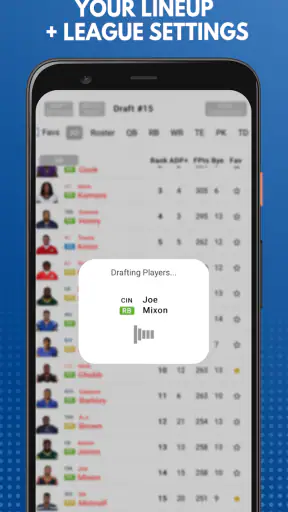
When an app like this appears to be giving poor advice, the first checks should be practical. I would confirm that I selected the correct league, especially if I manage more than one team. I would then review the scoring format and roster positions. A setting that changes how quarterbacks, running backs, receivers, or flex players are valued can alter the entire shape of a recommendation.
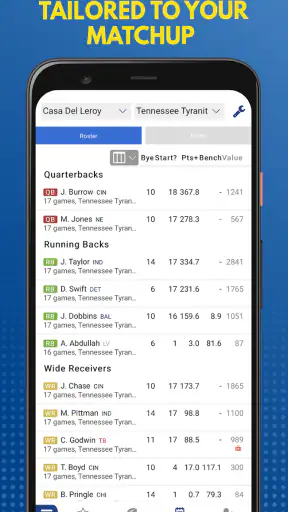
I would also check whether the roster shown in the app matches the roster I actually control. A recently completed trade, waiver move, or lineup edit may not be reflected immediately in every tool. If the app is evaluating an older version of my team, the result may look wrong even though the analysis is based on different information than I intended.
Another useful check is the selected week or decision period. Fantasy managers often switch between the current matchup and a future week when planning ahead. If I am looking at the wrong period, a sensible recommendation can appear irrelevant. Before judging the result, I would make sure the schedule context matches the question I am asking.
These checks are especially important because the app is free to install but includes optional in-app purchases ranging from about thirteen dollars to around ninety dollars per item. I would not pay for anything simply because the first session feels confusing. I would first make sure the basic setup is correct and that the workflow fits my league. A paid feature cannot repair incorrect league information or an unclear decision.
The app’s age rating of Everyone makes it accessible from a content standpoint, but that does not mean every fantasy concept will be beginner-friendly. The challenge here is strategic rather than mature content. New players may benefit from learning the vocabulary of their league before relying heavily on analysis.
A sensible setup routine
I would identify the exact league and confirm that the team shown is mine.
I would check scoring rules and roster positions before comparing players.
I would confirm the relevant week and note whether the decision concerns a starter, bench player, trade, or roster spot.
I would compare the app’s result with current real-world information before making a change elsewhere.
This sequence sounds basic, but it addresses the most common kind of fantasy-app error: not a broken calculation, but a correct calculation applied to the wrong context. I prefer this approach because it keeps the tool in its proper role. It helps me organize a decision, while I remain responsible for checking whether the decision still makes sense.
On older Android devices, I would also make sure the phone has enough free space and a stable connection before assuming the app has failed. Because the minimum operating system is Android 5.1, compatibility is broad, but an older device can still make loading and switching between screens feel less smooth than on newer hardware.
Recovering a stalled or unhelpful workflow
If a session stops making sense, I would avoid repeatedly tapping through the same screen. My first recovery step would be to return to the league or roster selection and rebuild the decision from the beginning. This is often faster than trying to correct a chain of choices made under the wrong week or scoring format.
If the roster looks incomplete, I would compare it with the official league service. I would look for a recent transaction, a player moved to a different roster slot, or a change that has not yet appeared in the analysis view. If the two sides disagree, the official league information should be my reference for what I actually own and can start.
For a recommendation that seems too strong, I would test it against a smaller question. Instead of asking whether the entire team needs to change, I might compare one starter with one bench option. This reduces the number of variables and makes it easier to see whether the problem is the player comparison, the league settings, or my interpretation of the result.
A realistic example is a busy weekday evening. I might receive last-minute news about a player, open the app while commuting, and notice that the suggested lineup conflicts with what I expected. Rather than immediately changing the team, I would check three things: whether the correct week is selected, whether the player is still on my roster, and whether the app’s information reflects the latest situation. If all three are correct, I would use the recommendation as one input and verify the news before acting.
This extra verification is not wasted time. Fantasy decisions often involve uncertain information, and no analysis tool can remove that uncertainty. The practical strength of League Dominator is helping me compare choices; its limitation is that I still need to understand the circumstances around those choices.
When a reset is better than persistence
If the app keeps presenting an obviously outdated roster or an unusable league context, I would close it and start again rather than build more decisions on top of questionable information. I would also update the app when an available update is offered, since the installed version is 2023.9 and fantasy information changes quickly over a season.
I would be careful with reinstalling or clearing app information unless I understood what might be removed. Any tool that depends on account or league configuration deserves a cautious approach. I would first note my league details and make sure I can sign back in or recreate the setup before taking a more drastic troubleshooting step.
For general connection problems, I would try a different network, reopen the app, and check whether other internet-dependent services are working. If only one screen behaves strangely, that points to a narrower issue than a complete connection failure. These are simple checks, but they help distinguish a temporary loading problem from a bad league setup.
I would not judge the app solely by how quickly it produces an answer. The useful result is the one I can understand and apply. If a slower review of the inputs prevents me from benching the wrong player, that is more valuable than a fast but poorly framed suggestion.
When the app is not the cause of the problem
Fantasy football creates situations where a correct recommendation can still look wrong after the games are played. A player may lose opportunities, a matchup may develop unexpectedly, or late information may change the outlook. That does not automatically mean the analysis failed. It means predictions are not guarantees.
I would also be cautious about blaming the app when the league’s own rules create an unusual result. Custom scoring, unusual roster positions, and league-specific settings can make a player appear more or less valuable than in a standard format. If the advice seems strange, I would inspect the rules before dismissing the tool.
Another outside factor is timing. A recommendation made before late news may no longer fit a player’s situation a few hours later. This is why I would use the app near a decision point, then verify relevant updates before submitting a lineup. The best workflow is not “open once and obey”; it is “analyze, verify, and act.”
There is also a human factor. Managers sometimes ask the app to confirm a preferred choice rather than evaluate the alternatives honestly. If the result disagrees with my instinct, I would examine the reasoning instead of searching until I find a more comfortable answer. The app is more valuable when it challenges my assumptions.
Compared with the usual fantasy league app, League Dominator is less convenient for simply checking scores, standings, or live matchup progress. The official league platform remains the better place for transactions and immediate league administration. Compared with a general fantasy news feed, this app is more directly connected to the decisions around my own team, but it demands more attention to league context.
That comparison explains who should skip it. If I only want quick scores, notifications, and a simple lineup screen, a standard league app is probably enough. If I play casually and do not enjoy examining roster choices, the extra analysis may feel like work. I would also skip it if I expect a tool to guarantee outcomes or remove the need to follow current player news.
On the other hand, I would recommend trying it if I manage a competitive league, regularly hesitate over borderline starters, or want a structured way to review roster weaknesses. It is particularly useful for the manager who has opinions but wants a second layer of discipline before acting.
My practical verdict after using it as a weekly companion
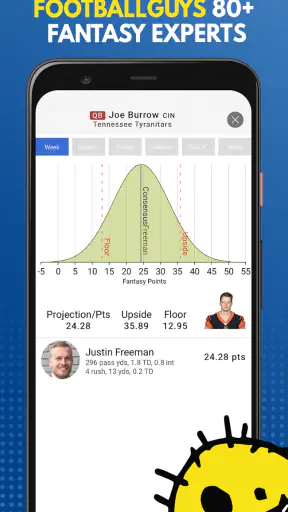
League Dominator is a focused fantasy football app with a clear audience. Footballguys has built it for managers who want help dominating their own league, but the useful part is not a magic answer. The useful part is the process of turning a vague roster concern into a comparison that I can inspect and verify.
I like that it can sit alongside the official league app rather than forcing me to replace it. I can use the league service for roster control and match information, then use this tool when I need to think more carefully. That division of labor makes sense and avoids expecting one app to do every fantasy task equally well.
The main trade-off is setup discipline. I need to select the right league, understand my scoring rules, confirm the week, and keep the roster current. If I skip those steps, the app may feel unreliable. If I complete them, the analysis becomes much easier to judge. In my experience, that makes the first session more demanding than a basic fantasy app, but later decisions more organized.
I would start with the free version and use it through several real roster decisions before considering any optional purchase. The price range for individual in-app items is wide enough that I would want to know exactly which problem a purchase solves for me. Paying for more analysis is only sensible if I already understand the workflow and use it often.
The average rating of 4.1 and the audience size of over ten thousand installs fit my experience: this feels like a specialized tool with genuine usefulness, not a universal fantasy destination. It has enough focus to help serious managers, but not enough simplicity to satisfy someone who wants only a quick glance at the week.
My recommendation is straightforward. Try it if you want a second opinion grounded in your league and are willing to verify the details. Keep your official fantasy platform for final roster actions, treat recommendations as guidance rather than certainty, and use current player news to fill in the gaps. For a manager who values a repeatable decision process, this is a worthwhile free starting point; for a purely casual player, the setup may outweigh the benefit.
FAQ
What is League Dominator and how does it work?
League Dominator is a companion-style app designed for League of Legends players who want additional information and tools while following the game. Depending on the version and platform, it may provide champion details, builds, statistics, matchup information, or other reference features. Before downloading, check the current store description carefully, since available tools, supported regions, and data sources can change between updates.
Is League Dominator an official Riot Games application?
League Dominator should not automatically be considered an official Riot Games product. Apps with similar names are often created by independent developers and may use publicly available game information rather than offering direct access to League of Legends. We recommend checking the developer name, privacy policy, permissions, and store listing before installation. Never enter your Riot account password into an unofficial application unless its legitimacy is clearly verified.
Can League Dominator be used to play League of Legends on Android or iPhone?
League Dominator is generally intended as a companion or information tool, not as a complete mobile version of the PC game. It should not be expected to provide the same gameplay, controls, matchmaking, or account features as League of Legends. Users should review the exact compatibility details for their device and operating system, because some versions may focus on statistics, guides, or game references rather than allowing you to play.
Does League Dominator require a Riot Games account or personal information?
The information required depends on the app’s current version and the features you choose to use. Basic guides or champion databases may work without an account, while personalized statistics or synchronization tools could request additional access. Before accepting, read the permissions and privacy information carefully. Avoid providing unnecessary personal details, and use only official login methods if the application genuinely supports account-based features.
Is League Dominator free to download, and are there advertisements or in-app purchases?
League Dominator may be available as a free download, but free access does not always mean that every feature is included. Some versions can contain advertising, premium tools, subscriptions, or optional in-app purchases. Check the Google Play or App Store listing for pricing information before installing, and review the purchase settings on your device. This is especially important if the app is used by children or on a shared account.
Pros
- Clear league tables make standings and form easy to follow.
- Useful match schedules help plan viewing around upcoming fixtures.
- Quick access to team and player statistics in one place.
- Lightweight design keeps navigation fast on most devices.
- Helpful notifications can keep you updated on important results.
Cons
- Coverage and features may vary between leagues and competitions.
- Some advanced statistics may require a premium subscription.
- Notification settings can feel limited for users wanting precise alerts.
- Ads may interrupt browsing in the free version.
- Data accuracy depends on how quickly results are updated.